


The Wickedness of Sodom and the Love Story of Yahweh
The narrative of Sodom and Gomorrah has always been one of the most tragic and sobering accounts in Scripture. It is a story of wickedness, rebellion, and divine judgment, but it is also a story of redemption, mercy, and the deep love that God has for His people. In the book of *Jasher* (chapters 18–19), this story is brought into sharper focus, revealing not only the extreme depravity of the people of Sodom but also a foreshadowing of God’s redemptive plan through His Messiah.
The Wickedness of Sodom
The people of Sodom, as described in *Jasher* 18–19, were notorious for their cruelty and wickedness. They tricked travelers, stole from the poor, and tortured those who were vulnerable. The city’s inhabitants engaged in unspeakable sexual practices, and their acts of violence and exploitation were so severe that they even mocked and tormented the poor. Medieval forms of torture, including the burning of people alive at the stake, were commonplace.
In one particularly harrowing scene, Lot’s daughter, Paltith, secretly fed a poor man in the city, defying the wicked law of Sodom. For this compassionate act, she was burned alive at the stake, a tragic death that echoed the cruelty of the city’s inhabitants.
Another account details the horrifying fate of a woman who was smeared in honey and released into a pit of angry bees, where she was stung to death. This type of barbarism had become commonplace in Sodom, and it was this accumulation of sin, cruelty, and evil that reached its boiling point in the eyes of Yahweh.
Yahweh’s Judgment: The End of Sodom
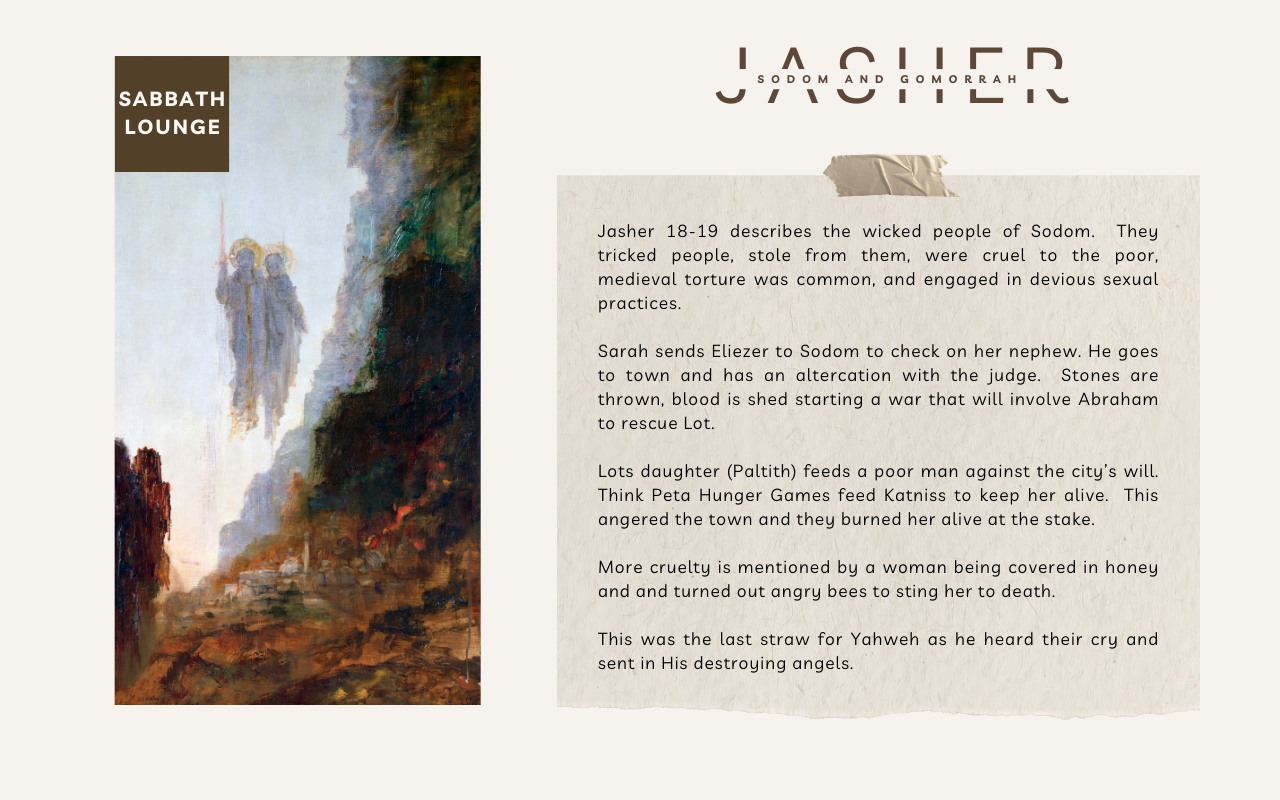
It is this unrelenting wickedness that ultimately provoked Yahweh’s judgment. He could no longer tolerate the cries of the oppressed, the tormented, and the abused. The cries of the poor and the innocent rose to heaven, and in response, Yahweh sent His destroying angels to bring judgment upon the city.


Leave a comment