Genesis 1:1-6:8

Our Thoughts on Genesis 1-6:8
Talking Torah – The Beginning of It All
Welcome to the first installment of Talking Torah with Matt and Jake! In this series, we aim to walk through the Torah portions, offering our reflections and insights on the Scriptures, chapter by chapter. While we don’t claim to have all the answers, we do want to dive deep into what the Word has to say and share our journey with you. Our goal is to keep it short, sweet, and thought-provoking. So let’s begin, starting at the very beginning—In the beginning… (Genesis 1:1).
The Hebrew Wedding Model in Genesis
Right from the opening verses of Genesis, we see a powerful and profound image—the Hebrew wedding model. We often overlook the fact that the creation story actually reflects the marriage covenant between Yahuah and His people. In the beginning, it was not just the earth and the heavens that were being prepared; there was also preparation for a bride.
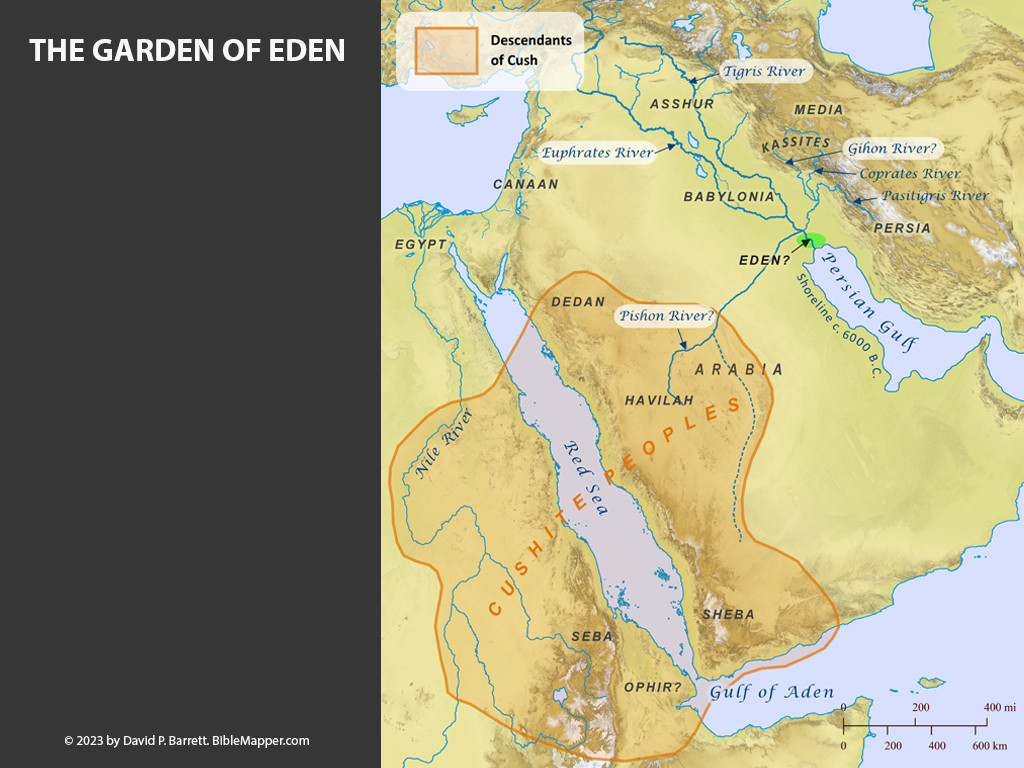
The Father, in His wisdom, prepared a place for His bride—much like the tradition of the Hebrew wedding. In Genesis, Adam is placed in the Garden of Eden, under the covering of the firmament, and is tasked with tending to it. This is the first stage of the wedding process: the groom prepares a place for his bride. Then, Adam, under the authority of the Father, prepares a place for Eve—his bride—in his “father’s house,” the garden. Afterward, the couple shares a meal, an important part of any biblical covenant, symbolizing unity and partnership.
This is a crucial part of the creation story. The relationship between Adam and Eve, and by extension, between Yahuah and His people, is rooted in this imagery of covenantal love. It’s a reflection of the wedding model that would be echoed throughout Scripture, culminating in the ultimate wedding feast at the end of time.
Genesis 1: The Two Creation Accounts?
As we move through the text, we arrive at a fascinating issue in Genesis 1 and 2: there appear to be two creation accounts of humanity. In Genesis 1:26, we see the creation of man in God’s image, and then Genesis 2:7 gives a more detailed account of Adam’s creation. This raises an interesting question—if Genesis 1 talks about the creation of humanity as a whole, why does Genesis 2 focus on the creation of Adam and Eve?
Jake and I had quite a lively discussion about this! From my perspective, it seems that Genesis 1:26 refers to the creation of humanity in a general sense—perhaps multiple people outside the Garden of Eden, who were later to be taught about Yahuah by Adam and Eve. This interpretation addresses the issue of incest in the early chapters of Genesis. It’s my view that these people were created outside the garden, and Adam and Eve were placed there as representatives of the Father, to be His priests to the world.
Jake, on the other hand, traditionally believes that Genesis 1 and 2 describe the same creation event but from different perspectives. Genesis 1 is the broad overview, while Genesis 2 zooms in on the creation of Adam and Eve, showing the details of their roles in the garden. This makes sense, but as Jake points out, we still have the issue of incest to grapple with. How do we reconcile that with the Torah, which later forbids sibling marriages?
We both agree that the question of Cain’s fear of other people after murdering Abel is also difficult to understand, but it might be explained by the idea that Adam and Eve had many children over the course of their long lives—enough to populate a city, as Cain feared for his life when he went out.
Ultimately, the details surrounding the early chapters of Genesis leave much to ponder, and there’s no easy solution to these complex questions. But we both encourage you to explore these ideas for yourself. After all, pondering these questions and looking for deeper meaning is part of the beauty of studying Torah.
A Priesthood from the Beginning?
One concept that I’ve found particularly interesting is the idea that Adam and Eve were the first priests of the Father. From the beginning, it seems that Adam and Eve were set apart to represent Yahuah’ s kingdom on earth. This brings us to the possibility of the Melchizedek priesthood—a priesthood that, according to Scripture, will be reinstated when Yeshua returns. The priesthood of Adam and Eve, functioning in the garden, is a shadow of the Melchizedek priesthood that we see in the New Testament. Yeshua, often referred to as the second Adam, may even be seen as fulfilling this role. As the ultimate High Priest, He is the fulfillment of what began in Eden.
Though I had not considered this in depth before we began discussing it, Jake’s insights into this model make a lot of sense. It’s fascinating to think that the priesthood that we will see in the Messianic Kingdom could have its roots in the very beginning, with Adam and Eve as the first priests.
Food, Rules, and Obedience
Another element that stands out immediately in Genesis is the focus on food. In fact, the first rule given to humanity is about food—specifically, the command not to eat from the tree of the knowledge of good and evil. This might seem like a simple, early rule, but it underscores something deeply significant. The Father cares about what we eat. Even in the beginning, food played a central role in His relationship with humanity.
This focus on food is something that carries through the entirety of Scripture. When we look at the Torah, we find that food laws are central to our relationship with Yahuah. They’re not just arbitrary rules; they serve to set apart His people. Why, then, would we ignore this teaching today? The importance of food laws is not something that just disappears after Eden.
Could Yeshua Have Walked in the Garden?
An intriguing question that arises when reading Genesis 3 is whether Yeshua Himself could have been the one walking in the garden with Adam and Eve. Throughout Scripture, we see various instances of Yahuah revealing Himself in physical form, walking with His people, as with Moses and Abraham. It’s entirely possible that this figure in the garden was, in fact, Yeshua, acting as the visible representation of Yahuah before His incarnation.
Though we can’t know for sure, it’s a fascinating idea to consider. The more we look at the life of Yeshua, the more we see that He was not just a man who came later in history, but also deeply involved in the creation process from the very beginning.
Resources for Further Study
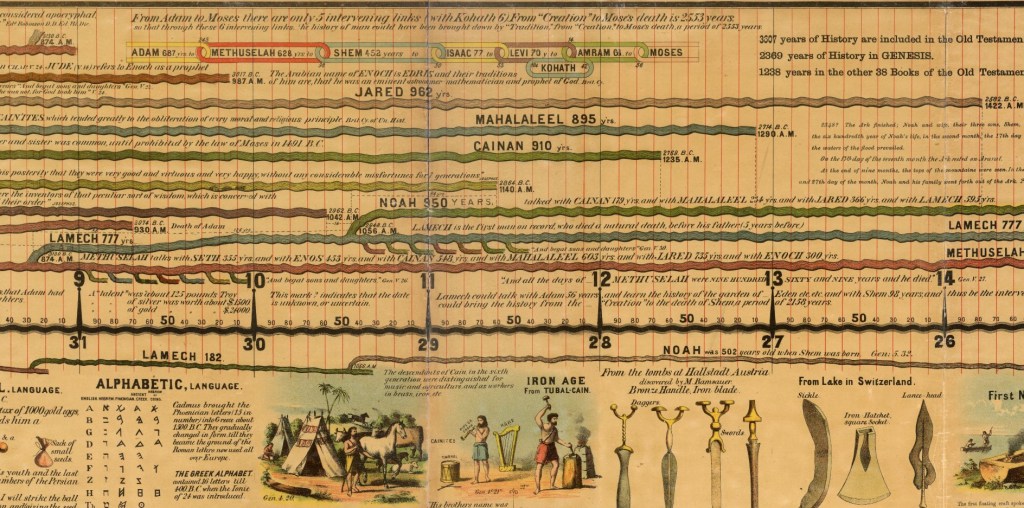
If you’re looking to dive deeper into these ideas, I highly recommend a resource I’ve been using: the Timeline of Biblical History by Adam’s Chronological Chart. This timeline, which dates back to the 1870s, provides a fascinating view of biblical history and the genealogies that connect the creation story to the flood and beyond. While some of the terminology might be challenging, it’s a great tool for anyone wanting to visualize the events in a larger historical context.
In conclusion, Talking Torah isn’t just about answering all the questions; it’s about sparking curiosity and encouraging deep thinking. We may not have all the answers, but we hope our journey through the text will inspire you to keep studying and seeking the truth. As always, we encourage you to read the Scriptures with an open heart and mind, free from bias, and to trust that Yahuah’ s Word holds the answers—even if it takes time to uncover them.


Leave a comment