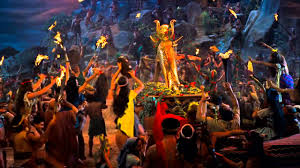
How the Party on the Mountain is linked to Messiah’s Death
Growing up, I often asked pastors and teachers why Yeshua had to die on the cross. The answers I received were usually framed in theological terms, such as “atonement” or “propitiation,” but neither the person providing the answers nor I fully understood them. They were just parroting phrases that they had heard. It wasn’t until I began to dive into the Scriptures myself that I realized how crucial it was to explore the meaning behind Yeshua’s death.
I’ve considered this question: Why did Yeshua have to die for us? It’s one of those questions that initially seems simple enough. After all, you always hear the answer: “Yeshua died for your sins.” That’s the answer you get when you ask a pastor, a teacher, or a friend. The answer settles the matter if you don’t think too hard about it. But the more I thought about it, the more that simple answer didn’t sit right with me.
It felt like I was missing something big, something more profound. So, like any curious person, I started asking questions. I remember asking my pastor, teachers, and even my parents as a kid. Why did Yeshua have to die? Why couldn’t there have been another way? If Yahweh created everything, why did He design a world where the only way to make things right was through such an extreme sacrifice?
I wasn’t satisfied with the usual answers. “Yeshua died for your sins” was all they said, and it felt like they just wanted to shut the conversation down. I could tell, especially as I got older, that they didn’t really understand the question. They just passed along what they’d been told, and it felt like they didn’t know why they were saying it, let alone why it was true.
It didn’t help that the answer always seemed to assume that I, or anyone asking the question, wasn’t at a level to understand it. I wondered if they were giving me the simple answer because they thought I wasn’t ready for the deeper stuff, or if they didn’t know themselves.
I leaned toward the latter. They were repeating things they had heard, but most hadn’t considered why Yeshua had to die. It was just part of the story they’d grown up with. When I got to high school, I knew something wasn’t adding up. The more I asked, the more it became clear that no one could explain why Yeshua died in a way that satisfied my more profound questions.
Fast forward to today, and I’m still asking. I have spent years researching, reading, and digging into this topic. What I’ve discovered has been eye-opening, to say the least. While I still don’t have all the answers, I’ve come to realize the question: Why did Yeshua have to die for us? It is much more complicated than Israel typically makes it out to be. And honestly, if you’re reading this, you’re asking the same question, or at least you should be. If you haven’t requested it yet, you will eventually.
The answer most people get, “Yeshua died to cover your sins,” is a good starting point, but it doesn’t get to the heart of what sin is. In my experience, most people lack a clear understanding of what sin is, even in a biblical sense. They think of sin as simply doing something wrong and breaking the rules. But when you look at the Bible, sin isn’t about actions; it’s about a condition of the heart, a state of separation from Yahweh, and a deep rift in the relationship between humanity and our Creator.
That was one of the first things that challenged me. If sin was just a matter of doing bad things, why did Yeshua have to die? Why couldn’t Yahweh forgive us as simply as that? But if sin is more complicated, something embedded in the very fabric of who we are, something that runs deeper than just a series of bad choices, then maybe, just maybe, the death of Yeshua starts to make a little more sense.
I think this question about why Yeshua’s death led me down the path I’m on now. When I was younger, I couldn’t make sense of it. I remember wondering, “If I were in charge, I would have done things differently.” Why create a system in which death and sacrifice are required? Why not just forgive us outright? That’s how I thought when I was younger, and it’s still a thought I struggle with today. But I’ve realized over the years that Yahweh’s plan is far more profound than I ever imagined.
If you’ve ever asked this question, I want you to know you’re not alone. And, more importantly, you’re not crazy for questioning the status quo. You’re asking a question that has been asked for centuries. Why did Yeshua have to die for us? There are many layers to this; the more you dig, the more you uncover.
I know this journey isn’t easy, and I haven’t figured it out. But here’s what I do know: there’s much more to Yeshua’s death than what’s usually taught in church. There are layers to this story that run deeper than the simple phrase, “He died for your sins.” Yes, that’s part of it. But you’re missing the bigger picture if that’s all you hear.
This whole journey started for me with a question about sin. What does this mean? The more I studied, the more I realized that sin wasn’t about rule-breaking; it was about something much more profound. Sin was the heart of the problem that separated humanity from Yahweh. And if that’s true, then maybe Yeshua’s death wasn’t about paying for individual sins. It was about restoring the relationship between humanity and Yahweh. It was about undoing the brokenness that had existed since the beginning of time.
But even as I’ve come to understand this more, there are still many pieces of the puzzle that I don’t have. I don’t have all the answers, and I’m not here to pretend I do. I don’t know everything there is to know about Yeshua’s death and its significance for humanity. But I do know that it’s worth the search. I’m sharing this to encourage you to dig deeper, ask hard questions, and not just take someone else’s word for it.
You can’t just trust someone else’s answers, especially regarding something as important as your faith. If you genuinely want to understand why Yeshua had to die, you will have to put in the work. You must research it, study the Bible, and ask tough questions.
And I promise you this: the deeper you go, the more you uncover. It’s not going to be easy, and it’s not going to be quick. But that’s part of the journey. And if you’re still asking or wondering why Yeshua had to die, you’re in the right place. Please stick with me. Let’s dig into this together. Because while I don’t have all the answers, I know one thing: the search is worth it. Together, we might find the answers waiting for us all along.
The Wedding Begins
A fundamental truth runs through the Bible’s entire story, and everything begins and ends with a wedding. I know it may sound strange at first, but upon examining the scriptures, you will see it everywhere. The imagery of a marriage frames the entire narrative of creation, redemption, and restoration. The beginning of Yahweh’s covenant with His people is a kind of wedding, and at the end of time, we’ll see the ultimate wedding, the marriage supper of the Lamb.
As I look deeper into the scriptures, I believe it’s not just a metaphor. It’s the framework that shapes the entire story. This wedding idea is woven through the fabric of scripture, from Genesis to Revelation. You must realize this central theme to understand what Yahweh is doing in history.
Let me take you back to the Book of Exodus, a pivotal moment in the history of Yahweh’s relationship with His people. This is where the wedding language first begins to take shape. In Exodus 6:7, Yahweh says to the Israelites, “I will take you as my people, and I will be your Elohim.” This is the kind of language you would expect from a groom speaking to his bride. “You will be mine, and I will be yours.” A deep relational covenant is being established here. This isn’t just about rules and regulations, but also about love, commitment, and intimacy. The beginning of a union sets the stage for the rest of the biblical narrative.
Exodus 6:7 (NOG)
7 Then I will make you my people, and I will be your Elohim. You will know that I am Yahweh your Elohim, who brought you out from under the forced labor of the Egyptians.
Exodus 6:7 (NOG)
When I first began exploring this concept, I was struck by the parallel to a wedding ceremony. Think about it: the groom makes a promise, a covenant, with his bride. And the bride, in turn, responds. This is precisely what happens in the book of Exodus. After Yahweh made His promise, the people responded in Exodus 19, saying, “We will do everything that Yahweh has said.” This is the “I do” moment. The bride is committed to living according to the covenant and being faithful and obedient. Yahweh’s commitment is not just a promise but a legally binding covenant. This is the kind of relationship that, like a marriage, is sealed with vows and oaths.
But here’s where it gets interesting. When Yahweh first calls Israel to this covenant at Mount Sinai, he invites the entire nation into an intimate relationship with Him. He wants all of them to draw near the mountain and to meet with Him directly. But the people, terrified by the thunder and smoke on the hill, pull back. They say to Moses, “You go up for us. ” They want Moses to stand in for them, to mediate the relationship between them and Yahweh. It was a rejection of the direct intimacy that Yahweh had offered.
This is where I started to see the parallels with how we sometimes treat our relationship with Yahweh. We’re invited into intimacy, but we often hold back. Like the Israelites at Sinai, we want someone else to do the hard work of relationships for us. We don’t always want to go up the mountain ourselves. We’d instead let someone else handle the “Yahweh stuff.” However, Yahweh has always desired a close, intimate relationship with his people. The marriage language is that He is offering Himself as the Groom, and we are called His bride.
This dynamic of rejecting intimacy isn’t limited to the Israelites. It’s a pattern that repeats throughout scripture and one that we see reflected in our own lives. Yeshua reintroduces this concept in the “New Testament” when he speaks with Peter. In one of the most tender moments in the Gospels, Yeshua asks Peter, “Do you love me?” He uses different words for love, progressively calling Peter to a deeper and deeper commitment. At first, Yeshua asks if Peter loves Him with the highest form of love, agape, but Peter can only respond with Phileo, a lesser form of love. In the end, Yeshua meets Peter where he is and asks, “Do you even love me like a friend?” Yeshua accepts Peter’s imperfect love and draws him in.
It’s a beautiful story of grace. Yeshua doesn’t require perfection but a willing heart. And I think that’s how we must see our relationship with Yahweh. We often approach Him with a sense of inadequacy, unsure of how to enter the intimate covenant he offers. But he’s not looking for perfection; he’s looking for commitment. He’s looking for the willingness to step into the relationship and say, “I do,” even if we don’t fully understand what that means.
The more I’ve thought about this, the more I’ve realized that the story of Israel at Mount Sinai is ours. We, too, were once at the foot of the mountain, caught up in the fear and awe of Yahweh’s holiness, and we, too, were invited into an intimate covenant with Him. The story of the Israelites at Sinai isn’t just about them; it’s about us. These are our ancestors, and this is our history.
Mount Sinai was a pivotal event in the history of the Israelites. Yahweh stood as the groom, offering a covenant relationship, and the people stood as the bride, committing themselves to Him. The altar at Sinai was the holy ground where the vows were spoken and the covenant was made. And just like at any wedding, there was an exchange of promises. Yahweh promised to be their Yahweh, to be faithful, guide, and protect them. The people promised to follow His commands, to be loyal to Him alone. And that promise that vow was binding. It was a contract, a legal agreement that defined the relationship between Yahweh and His people for generations to come.
In ancient times, the power of a person’s words was much greater than it is today. A promise, a commitment, was a powerful thing. When my grandfather needed a loan for my brother and me to buy cattle, he didn’t need to sign a stack of papers. He only had to speak the word, and the banker trusted him. His words were enough to seal the deal. That’s how sacred and binding oaths were back then, and that’s the kind of commitment Yahweh offers here at Sinai. His words are His bond, and His promises are unbreakable.
Wedding imagery is central to understanding Yahweh’s relationship with us. Yahweh’s covenant with Israel and us is a binding commitment like a wedding vow. It’s not just about rules to follow; it’s about a relationship. It’s about love, trust, and faithfulness. Yahweh is not some distant deity giving us commands from afar. He’s the Groom, and we are His Bride, called into the most intimate of relationships.
So, when you think about it, the entire story of the Bible is one big love story, one that begins with a wedding and ends with one. In the midst of this, Yahweh calls His people to a more profound, more committed love. He offers Himself to us and asks for our wholehearted commitment in return. It’s a story of rejection, acceptance, failure, and grace, but it’s a story of an unbreakable covenant. This is the foundation of everything Yahweh does in history: He is the Groom, and we are the Bride. And no matter how often we reject Him, He continues to offer His love, inviting us back into that relationship.
As we begin to understand this wedding covenant, we see how Yahweh’s love story with us is intricately woven into every part of scripture. It’s not just ancient history; it’s our story, one that continues to unfold today.
The Unholy Feast
This wedding language frames much of Yahweh’s covenant relationship with His people. The more you dive into it, the more you’ll see how deeply the marriage imagery is woven into the Scriptures. It’s there in the beginning, and at the end, everything revolves around this central theme. However, the biblical story of Yahweh’s relationship with His people begins with a wedding.
Now, I want to set the stage for a significant moment in the book of Exodus: a pivotal decision made by the people of Israel that will haunt them for generations. Oddly enough, this moment unfolds right amid a marriage ceremony, though the people don’t see it that way.
At the time, the Israelites were at the foot of Mount Sinai, standing in the presence of Yahweh, Yahweh Himself. Moses had gone up the mountain to receive the commandments, covenant terms, and marriage vows that would bind the people to Yahweh. However, as Moses was up there receiving these sacred instructions, something went wrong.
You see, Moses wasn’t just gone for a day or two. He was up there for forty days and forty nights. At that time, the people grew restless. They had been waiting, waiting, and waiting. You can almost feel the tension in the air, the frustration that builds when people feel like they’ve been abandoned or forgotten. The people saw Moses taking too long to return from the mountain. They were losing hope and patience. Their eyes turned away from the promise they had made to Yahweh, and instead of remaining faithful, they began looking for another Yahweh to lead them.
They gathered around Aaron and said, “Come, make us Yahweh’s who will go before us. As for Moses, who brought us out of Egypt, we don’t know what happened to him. ” They had been in the desert for so long that they were losing sight of everything they had been promised. They wanted something tangible, something they could see and touch, something that could lead them through the wilderness.
It’s easy for us, looking back with the benefit of hindsight, to criticize the Israelites for their impatience and lack of faith. However, before we get too smug, we should remember how often we get distracted from Yahweh’s promises. We live in a world of instant gratification, and waiting for something good feels impossible. But the reality is that when we lose patience with Yahweh’s timing, we often make choices that lead us down paths that we regret.
So, Moses is still up on the mountain, receiving the covenant from Yahweh, while the people of Israel are down below, building an idol. Aaron, their leader in Moses’s absence, gives in to their demands. He melts down their gold and fashions a golden calf. Then comes the twist in the story: Aaron declares, “Tomorrow is a feast to Yahweh.”
This might seem confusing at first because Aaron is not offering a feast to Yahweh. The calf isn’t Yahweh. This is an attempt to blend idolatry with the worship of the true Yahweh, a syncretism that tries to take something unholy and make it seem acceptable by calling it “for Yahweh.” But, as anyone who understands Yahweh’s heart knows, you can’t just declare something holy by saying it is. You can’t take what is impure and try to dress it up as if it’s acceptable to the Almighty. The people’s actions were not only disobedient but also a complete rejection of the covenant they had just agreed to, and their worship had become a mockery.
What happens next is a tragedy and a sad commentary on people’s hearts. The Israelites get up early the next day, offer sacrifices, and indulge in a celebratory feast. Exodus 32:6 (KJV) says, “So the people sat down to eat and drink and rose to play.” If you’ve read this in your Bible and moved past it without thinking, I would encourage you to go back and dig deeper. The phrase “rose to play” may initially sound innocent, but it’s a euphemism for something much darker. If you research it, you’ll find that it’s referring to a kind of debauched revelry involving sexual immorality and pagan rituals.
This moment isn’t just a matter of breaking a few rules; it’s something far worse. While the marriage ceremony was happening, while the vows were being exchanged between Yahweh and His people, and while He was setting up the terms for an everlasting covenant, the people were already prostituting themselves. They were cheating on the very Yahweh who had saved them from slavery. It wasn’t just infidelity in the metaphorical sense; it was spiritual adultery, a violation of the sacred covenant.
And what’s even more jarring is that this happened almost immediately after they had agreed to the covenant. Remember, they had just promised to do everything Yahweh commanded. They had decided to be His people, and He had agreed to be their Yahweh. This act of idolatry turned into another Elohim, like a bride cheating on her groom the moment the vows were spoken. Imagine the horror of such a betrayal at any wedding, let alone one of cosmic importance.
Moses’s reaction when he comes down from the mountain is understandable. When he sees people dancing around the golden calf and engaging in immoral and idolatrous behavior, he is filled with righteous anger. In Exodus 32:19, Moses’s anger “waxed hot,” and he threw down the tablets of the covenant, those sacred promises, the marriage vows, shattering them at the foot of the mountain. It was a symbolic act that demonstrated the gravity of their sin and the breaking of the covenant before it had even been thoroughly sealed.
The tragedy of this moment is that the people sinned and sinned in the very presence of Yahweh amid a sacred ceremony. It’s one thing to sin in ignorance, but to turn away from the one who has been faithful to you in entering into a covenant with Him is a betrayal on a whole new level.
As Moses confronts the people about their actions, the consequences are severe. However, I want to pause here and reflect on how this moment resonates with us today. We live in a world that constantly seeks quick fixes, instant gratification, and distractions. We often try to blend our faith with the world, justifying things we know aren’t right by saying they’re “for Yahweh.” But, just like the Israelites, we can’t call something holy simply because we say it is. We can’t live double lives, worshipping Yahweh one moment and turning to idols the next. We’re called to be faithful to the one who saved us, live with integrity, and honor our vows.
This moment at Mount Sinai shows how quickly things can unravel when we take our eyes off Yahweh. But it also reveals the depth of Yahweh’s love and grace, because despite this betrayal, He doesn’t give up on His people. Just as a groom would not abandon his bride, Yahweh offers His people a way back into the covenant, a chance to repent, return, and be restored. It’s a messy, painful, and complicated relationship, but it reveals the heart of Yahweh’s heart that longs to be faithful, even when we are not.
So, while the story at Sinai is tragic, it’s also a lesson in grace. Yahweh may be angry, but he is also merciful. He does not abandon His people, even when they have been unfaithful. And this is the beauty of the gospel, the story of a faithful Yahweh who keeps His promises, no matter how many times we break ours.
The Bitter Water of Jealousy
When the golden calf was created, and the people of Israel began to worship it in wild, unrestrained revelry, Moses’ anger was palpable. In his rage, he took the idol, burned it in fire, ground it into powder, and threw the golden dust into the water, compelling the Israelites to drink it. This was no ordinary act of retribution. It was something more profound, symbolic, and, as we’ll explore, rooted in ancient practices of trial and judgment.
This might seem like an extreme, almost absurd punishment. After all, what does drinking gold and infused water do to their sins? It’s strange, even grotesque, to think about. But a fascinating connection emerges if we dig deeper into the Scriptures, particularly the book of Numbers.
In Numbers 5, we encounter a curious law known as the “ordeal of jealousy.” This law provided a way for a husband to determine whether his wife had been unfaithful should he suspect her of infidelity. The process was simple in its brutality: If a man suspected his wife of unfaithfulness but had no proof, he was to take her to the priest. The priest would prepare a special drink, a bitter concoction of water and dust from the Tabernacle floor, and make the woman drink it. If she were guilty, the water would curse her, causing her body to suffer. If she were innocent, the water would have no effect.
Now, you might wonder: Why would this strange ritual be linked to the Israelites’ idolatry at Mount Sinai? What is the connection between the people drinking water laced with the remains of the golden calf and the jealous husband’s trial of his wife? It’s all about the symbolism of purity, fidelity, and judgment.
In the case of the golden calf, the people of Israel committed an act of spiritual adultery. While Moses was on the mountain receiving the law and the covenant, the people were busy betraying Yahweh, who had brought them out of Egypt. They had entered into a covenant with Him like a bride entering marriage, and yet here they were, prostituting themselves to a golden idol, chasing after a false Yah. In the ancient world, idolatry was often compared to infidelity, and the Israelite covenant with Yahweh was considered a marriage of sorts. This idolatry wasn’t just a breach of ritual but a profound betrayal.
So, when Moses made people drink the water laced with gold powder, it wasn’t just a punishment. It was an act of purification. The bitter water symbolizes the curse of the covenant being broken, much like the jealous husband’s trial in Numbers 5. Just as a wife suspected of adultery had to drink bitter water as a means of proving her faithfulness, the Israelites were forced to drink bitter water because of their unfaithfulness. The act was both a consequence and a reminder: Breaking the covenant with Yahweh comes with a price, and that price is often bitterness and suffering.
But this raises another question: Why did Moses grind the golden calf into powder, scatter it in the water, and make the people drink it? What did it signify? In the context of Numbers 5, the water a woman drank during the jealousy ordeal was intended to reveal the truth. If the woman were guilty, the water would cause physical harm. If she were innocent, the water would leave her unharmed. Similarly, the Israelites were forced to confront the truth of their sins by drinking water mixed with the idol’s powder. The water was a test of their fidelity to Yahweh, to the covenant they had just sworn to uphold. It was brutal, the public reckoning for their actions.
It’s also worth noting that this “bitter water” didn’t just represent a physical curse; it represented the spiritual reality of their betrayal. The Israelites drank down their sins, and by doing so, they tasted the bitterness of what it meant to break their vows to Yahweh. There was no turning back; the bitterness would linger in their mouths, just as the consequences of their sins would linger in their lives. Numbers 5:21-24 speaks of two possible outcomes:
- If the woman is innocent, nothing happens. She is declared clean and able to continue her life.
- If she is guilty of adultery, the bitter water will cause her womb to swell, her stomach to bloat, and she will be cursed among her people.
Numbers 5:21-24 (NOG)
21 may Yahweh make you an example for your people to see what happens when the curse of this oath comes true: Yahweh will make your uterus drop and your stomach swell.’[a]“Then the priest will administer the oath and the curse by saying: 22 ‘May this water that can bring a curse go into your body and make your stomach swell and your uterus drop!’ “Then the woman will say, ‘Amen, amen!’23 “The priest will write these curses on a scroll and wash them off into the bitter water. 24 Then he will have the woman drink the bitter water that can bring the curse. This water will go into her and become bitter.
Numbers 5:21-24 (NOG)
Links
Week 21 KiTisa (When You Take)
Explore Key Sabbath Lounge Teaching Topics
Week 20 Tetzaveh (You Shall Command)
Bitter Waters
| Step | Action | Details | Possible Outcomes |
| 1 | Husband suspects wife of adultery. | The husband believes the wife has been unfaithful but has no witnesses or hard evidence. | Proceed to the next step if suspicion persists. |
| 2 | The wife is brought before the priest | The wife undergoes a ritual in front of the priest. | |
| 3 | Ritual preparation | The priest prepares “bitter waters,” a mixture of holy water and dust from the Tabernacle floor. He writes a curse on a scroll and washes it off into the water. | |
| 4 | Wife drinks the bitter waters | The wife is instructed to drink the bitter waters that contain the curse. | |
| 5 | Outcome: Innocence | If the woman is innocent, nothing happens, and she is declared clean. She can continue her life. | Outcome: Innocent—Nothing occurs, and the woman continues life as usual. |
| 6 | Outcome: Guilt | If the woman is guilty, the bitter waters cause her womb to swell and her stomach to bloat. She will be cursed among her people. | Outcome: Guilty—Physical suffering occurs as a sign of her guilt. |
| Aspect | Golden Calf (Exodus 32) | Bitter Waters (Numbers 5:11, 31) |
| Nature of the Sin | Idolatry and spiritual adultery: Israel worships a golden calf. | In cases of adultery or suspected adultery, the woman is tested for unfaithfulness. |
| Symbolism | The golden calf symbolizes the betrayal of Yahweh, like spiritual adultery. | The bitter waters represent the curse of unfaithfulness in marriage and the breach of covenant. |
| Moses’/Priest Role | Moses confronts the people, destroys the calf, and forces them to drink the water with gold powder as a form of purification. | The priest tests bitter waters, testing the woman’s faithfulness. |
| Method of Judgment | Moses makes the people drink water mixed with gold dust, symbolizing the bitterness of breaking the covenant. | The woman drinks the bitter waters; if she is guilty, she suffers physical harm. |
| Divine Jealousy | Yahweh’s jealousy is stirred by the Israelites’ unfaithfulness (Exodus 34:14), akin to a husband’s jealousy over a wife’s infidelity. | Yahweh’s jealousy is invoked as the righteous anger of a husband over unfaithfulness. |
| Physical Consequence | The people experience physical consequences (plague, death) due to their sin of idolatry. | If guilty, the woman suffers a physical curse; if innocent, she remains unharmed. |
| Covenant Broken | The Israelites broke their covenant with Yahweh by worshiping idols. | The woman’s faithfulness to her husband (and, by extension, Yahweh) is tested. |
| Spiritual Lesson | Breaking a covenant with Yahweh brings bitterness and suffering; idolatry leads to judgment. | The test reveals the truth and brings consequences for spiritual unfaithfulness. |


Leave a comment