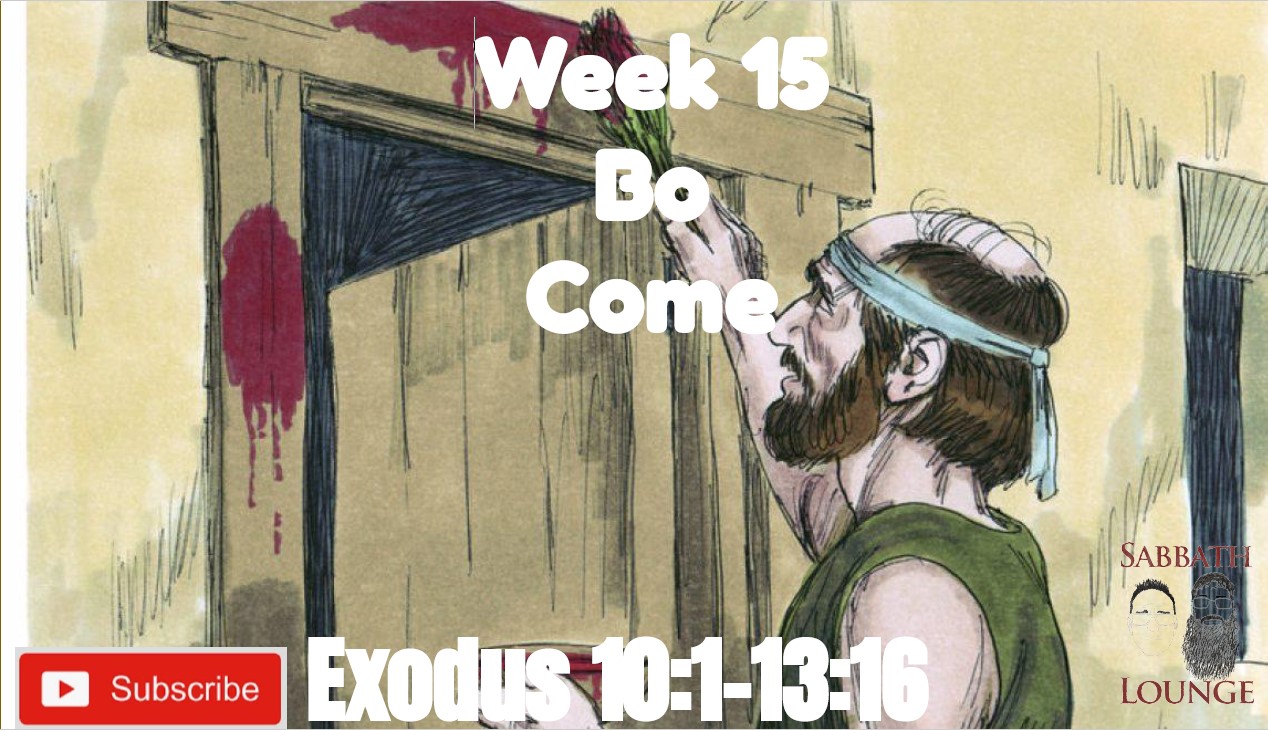

This week’s Torah portion, Bo (Exodus 10:1–13:16)
In this episode, we’ll explore the chaos of the plagues, the importance of preparation, and the powerful symbolism behind the Passover. So, let’s get started!
This week’s portion picks up with the plagues of locusts, darkness, and the death of the firstborn. As we’ve discussed, each plague targets one of Egypt’s deities but also reflects struggles we can still relate to today. Remember, these events are not just ancient stories; they are our forefathers’ experiences and offer lessons for us.
The plagues escalate, each one more intense than the last. Pharaoh is being tested, but his heart remains hard. It’s almost as though he’s questioning his life choices, but his arrogance and stubbornness keep him from acknowledging the power at work. The final plague, the death of the firstborn, seals his fate. However, interestingly, the text doesn’t explicitly state that Pharaoh died in the Red Sea. This raises the intriguing possibility: Did Pharaoh ever come to understand the gravity of his decisions? Did he finally recognize that the God of Israel was the real deal? We may never know, but it’s a thought worth considering.
As we reflect on Pharaoh’s role in the Exodus story, Romans 9 offers insight into his purpose. The Apostle Paul refers to Pharaoh as a “vessel for honorable use” that serves a greater purpose. Once that purpose is fulfilled, the vessel is set aside, which opens up an opportunity for repentance. If Pharaoh had repented after the final plague, what might have happened? Ultimately, his heart remained hard, which sealed his fate.
The locusts bring chaos, the darkness represents fear and separation, and the death of the firstborn is the final blow. These plagues disrupt Egypt’s entire system, especially the worship of the sun god, Ra. When darkness descends on Egypt, it’s a spiritual blow. Yet, there was light in the land of Goshen, where the Israelites lived. This brings up an interesting thought: Could they see the light from Goshen amid Egypt’s darkness? Probably not, since the darkness was so thick it could be felt. But there’s something symbolic here, especially when we think about how darkness is often associated with fear and the unknown.
This dark plague is a powerful reminder of how the unknown can stir fear in our hearts. It’s easy to imagine how panic and chaos would arise if we were to lose power in the modern world. People would be desperate for any light or clarity. The Israelites, however, were protected from this darkness. And this wasn’t just a random event; it was a direct challenge to one of Egypt’s most revered deities, Ra, the sun god.
Now, as we move into the Passover moment, we see the blood on the doorposts, marking the homes of the Israelites and ensuring their protection from the angel of death. The language of invitation is essential here. “Come” (the meaning of Bo) doesn’t mean “go away”; it’s about coming together. It’s about being invited into something more significant. When we look at the imagery, it’s easy to see parallels with Yeshua, who stands at the door and knocks, inviting us to join Him. The blood on the doorposts signifies God’s protection, and just as the Israelites were saved by grace through faith in the instructions they followed, so too are we saved through faith.
There’s a wedding-like language in this Passover moment. Just as a bride and groom are united, the Israelites were united with God through their obedience. When they applied the blood to their doorposts, they were essentially inviting God to dine with them, to be in their homes, and to protect them from death. It’s a powerful symbol of salvation and grace. In many ways, the Passover sets the stage for understanding salvation in the New Testament.
Preparation was a key part of the Passover. The Israelites had to be ready to leave at a moment’s notice. God gave them the instructions, but they still had to act on them. This concept of being prepared is one that we can apply to our lives today. There’s an important lesson here about being spiritually and physically prepared for whatever may come. While God provides for us, we also have a responsibility to prepare. In the same way, the Israelites were instructed to have their staff in hand and sandals on their feet, and we should be ready for what lies ahead.
Being a “prepper” isn’t just about stockpiling supplies; it’s about having a readiness mindset. Are we spiritually prepared? Do we have our “GO bags” packed with the essentials of faith, obedience, and trust in God? When the time comes, will we be ready to follow where He leads?
One thing we know for sure: The Israelites were shielded by their faith in God’s word. They trusted in the instructions He gave them, and they acted in faith. Their preparation, combined with God’s grace, was their salvation. For us today, it’s the same. We must trust in God’s promises and be ready to act on them. The story of the Exodus teaches us not just about the past but about how to live faithfully in the present.
Finally, as we look at this portion, we see that the Exodus isn’t just an ancient event; it’s an ongoing story. Every step of the way, God taught His people lessons that are just as relevant today. The key takeaway here is that we are all part of this story. We, too, are invited to “come” and be part of God’s plan for salvation.
As we wrap up this week’s study, we encourage you to reflect on these themes: preparation, obedience, salvation, and God’s faithfulness. These timeless truths apply to us just as much as they did to the Israelites.
We hope you enjoyed this discussion of Bo and that it encourages you to dive deeper into the Scriptures. Don’t forget to like, subscribe, and leave a comment below. Check out our website, SabbathLounge.com, for more content. Remember, your time is valuable, and we appreciate you spending it with us.
Until next time, this is Matt and Jake.
The Real Clash of the Titans
| Plague | Description | Targeted Egyptian Deity/Theme | Purpose/Message |
|---|---|---|---|
| 1. Water Turned to Blood | The Nile and other water sources turn to blood, making them undrinkable. | Hapi (god of the Nile), Osiris (god of fertility) | Attack on the provision of life (water), showing Yahweh’s dominion over creation. |
| 2. Frogs | Frogs infest the land, entering homes and kitchens. | Heket (frog-headed goddess of fertility and childbirth) | Attack on fertility, which was highly valued by Egyptians. |
| 3. Lice or Gnats | Dust turns into lice or gnats, affecting humans and animals. | Geb (god of the earth) | Attack on vanity and humanity’s reliance on the earth’s resources. |
| 4. Flies | Swarms of flies fill the land, causing destruction. | Khepri (god of creation, associated with beetles) | Symbolizing decay, waste, and impurity, leading to discomfort. |
| 5. Disease on Cattle | Egyptian livestock die, devastating the economy. | Hathor (goddess of love, beauty, and fertility, often depicted with horns) | Attack on their cattle and fertility, which were symbols of wealth and protection. |
| 6. Boils | Painful boils and sores break out on people and animals. | Sekhmet (goddess of healing and war, but could cause disease) | Attack on vanity and human dignity, as boils are disfiguring and painful. |
| 7. Hail | A destructive hailstorm with fire that destroys crops and property. | Tefnut (goddess of moisture) | Attack on their provision, showing Yahweh’s control over weather and destruction. |
| 8. Locusts | Locusts swarm, consuming what is left after the hailstorm. | Serapia (god of grain, food) | Attack on their food supply and the fertility of the land. |
| 9. Darkness | A thick darkness covers the land for three days, preventing any activity. | Ra (sun god) | Attack on the power of the sun god, showing Yahweh’s dominion over all celestial forces. |
| 10. Death of the Firstborn | All firstborn in Egypt die, both human and animal. | Pharaoh (considered a god himself) | Final demonstration of Yahweh’s power and control over life and death. |


Leave a comment