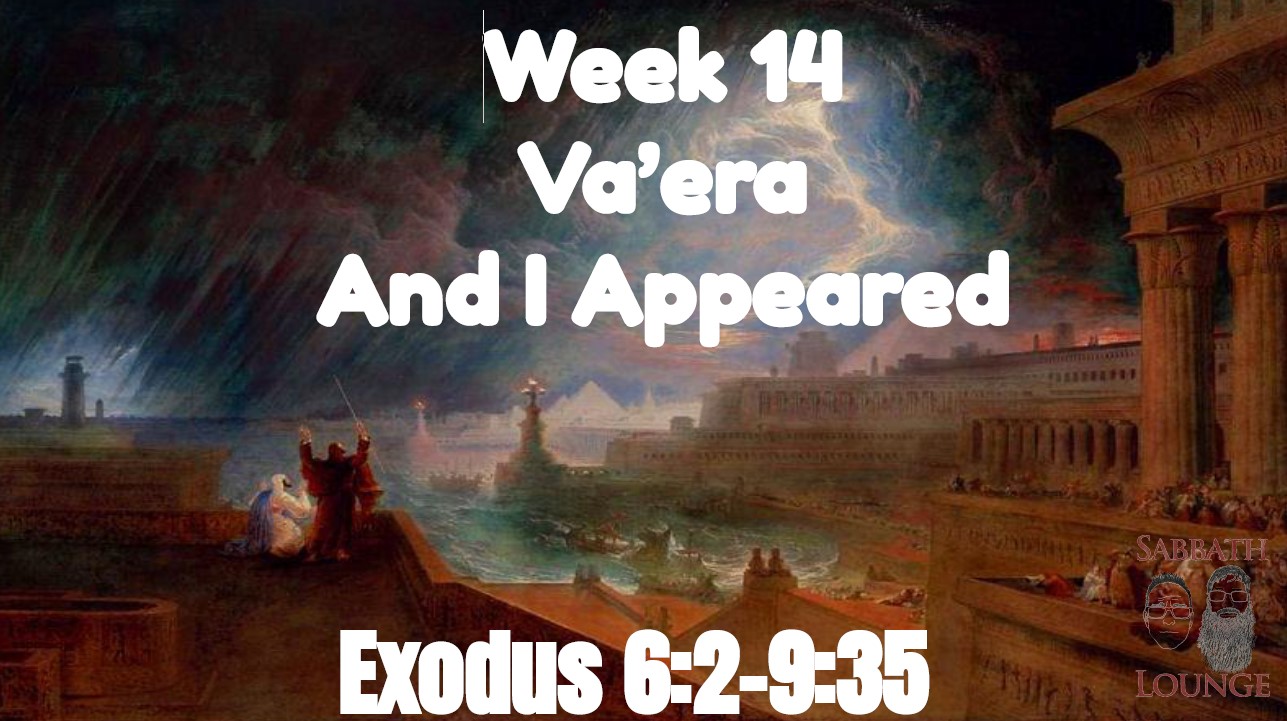
Shabbat Lounge: Talking Torah – Vayera Edition
Today, we’re talking about Vayera—you know, the one where God “appears” in a pretty big way.
Now, we’re not talking about UFOs or jetpacks, but there is a showdown happening here. It’s one of those “show up in a big way” moments, and we’re going to break it down.
What’s It All About?
Vayera, found in Exodus 6:2 through 9:35, is all about the plagues. If you’re familiar with the story, you know that Yahweh unleashes a series of plagues upon Egypt to convince Pharaoh to let the Israelites go. But what’s fascinating is that each of these plagues isn’t just random—they’re targeted directly at the Egyptian gods, showing that Yahweh is the one true God, not Pharaoh or any of the Egyptian deities.
Now, let’s highlight a few of these plagues, starting with the Nile turning to blood. The Nile was the lifeblood of Egypt, so when Yahweh turned it into blood, He wasn’t just making a nuisance—He was attacking Egypt at its core, its essential source of life. Think about it: Egypt relied on the Nile for trade, water, and sustenance. Without it, they were in big trouble.
This also connects to the larger picture of how Egypt’s many gods were believed to control different aspects of life. The frog goddess and the god of the earth’s dust are just some examples of how these deities were worshiped. But what we see here is that Yahweh is showing them—I control everything. He’s putting the spotlight on their gods, revealing them as powerless.
The Cosmic Showdown
What’s particularly striking about Vayera is how the plagues demonstrate Yahweh’s dominion over all of nature—Earth, Wind, and Fire (yes, the band is an easy way to remember this). He controls the water, frogs, gnats, hail, and more. And it’s not just symbolic. The elements themselves are at His command, showing Egypt who’s really in charge.
Take, for instance, the hail and fire plague in Exodus 9:23. Imagine the chaos—Moses stretches his rod toward heaven, and Yahweh sends down thunder, hail, and fire. It was a devastating combination, and again, it’s all about showing Yahweh’s power over nature. Pharaoh’s gods were powerless in comparison.
The Plagues and Israel’s Separation
But here’s something to think about: the Hebrews had to endure the first few plagues right along with the Egyptians. Why? Well, I think it’s a foreshadowing of how the faithful will face trials, especially in the end times. The Hebrews needed to understand that Yahweh was not just delivering them physically—He was preparing them spiritually, setting them apart for a holy purpose.
This also ties into the Fourth Commandment, where we learn about the importance of Shabbat. God tells Israel that they are to be holy and set apart, and Vayera emphasizes this separation. By the time the fourth plague hits, it’s clear that Yahweh’s people are no longer just another part of Egypt—they are distinct.
The Drama Behind the Plagues
And let’s not forget the ongoing interaction between Moses and Pharaoh. Pharaoh was viewed as a god in Egypt, and yet, Moses was given the authority to stand before him. At first, Pharaoh might have been intrigued by Moses, seeing him as some kind of divine figure himself. But as the plagues progressed, Pharaoh’s resistance only led to more destruction. Moses was no joke.
And as the plagues mounted, you see a shift in Egypt. Some of Pharaoh’s servants began to fear Yahweh. In Exodus 9:20, some servants took Moses’ warning seriously, bringing their animals indoors to protect them from the storm. It was a small but significant acknowledgment of Yahweh’s power.
More Than Just Plagues
Of course, the plagues are the main event, but there’s more going on here. It’s not just about the dramatic events—it’s about what they reveal about humanity. Think about it: Egypt’s idolatry was built on things like fertility gods, earth deities, and other forces of nature. By the time the plagues were over, it was clear who controlled these things. Egypt’s very way of life was shaken to its core. These weren’t just natural disasters—they were direct attacks on Egypt’s beliefs and gods.
When we look at the frogs, for example, they were symbolic of fertility, but they also served as a reminder of how fragile their ecosystem was. Frogs are actually a good indicator of how healthy (or unhealthy) an environment is. In Egypt’s case, the abundance of frogs signaled a collapse of the natural order. When you think about it, each plague was a reflection of a deeper spiritual problem.
The End of Egypt’s Reign?
By the time we reach the boils, hail, and cattle disease, we see Egypt reeling. These plagues weren’t just about inflicting pain; they were about breaking Egypt’s pride. The boils on people’s bodies were a direct attack on vanity and their gods. Imagine a Hollywood star suddenly covered in boils—it would be catastrophic, right? That’s the kind of humiliation Egypt was facing.
And then, there was the hailstorm—not your average thunderstorm. This was a disaster that took down Egypt’s entire way of life. Crops destroyed, animals killed, and people left with no resources to rebuild. Egypt was devastated.
The Big Picture
So, what’s the takeaway from all this? Well, these plagues point to disobedience—disobedience to Yahweh’s commands. It’s a powerful reminder that when we turn away from God, we open ourselves up to natural consequences. This is a theme that continues throughout scripture, from Exodus to the Revelation. Disobedience leads to destruction, while obedience leads to life.
This isn’t just a lesson for Egypt—it’s a lesson for us today. How often do we live in disobedience to God’s law? How often do we rely on other “gods” (whether they’re our careers, possessions, or even our own pride) instead of acknowledging the One true God?
Wrapping Up
So, as we wrap up this edition of Shabbat Lounge, we encourage you to read between the lines of the plagues. It’s not just about frogs and hail—there’s deeper meaning in these events. What does it mean for us today? How do we see these themes playing out in our world? And don’t forget, this stuff is all about setting Yahweh’s people apart for something greater.
Thanks for joining us for Vayera week, and remember—please like, subscribe, and share! And of course, check out our website at SabbathLounge.com for more resources and content.
The Real Clash of the Titans
| Plague | Description | Targeted Egyptian Deity/Theme | Purpose/Message |
|---|---|---|---|
| 1. Water Turned to Blood | The Nile and other water sources turn to blood, making them undrinkable. | Hapi (god of the Nile), Osiris (god of fertility) | Attack on the provision of life (water), showing Yahweh’s dominion over creation. |
| 2. Frogs | Frogs infest the land, entering homes and kitchens. | Heket (frog-headed goddess of fertility and childbirth) | Attack on fertility, which was highly valued by Egyptians. |
| 3. Lice or Gnats | Dust turns into lice or gnats, affecting humans and animals. | Geb (god of the earth) | Attack on vanity and humanity’s reliance on the earth’s resources. |
| 4. Flies | Swarms of flies fill the land, causing destruction. | Khepri (god of creation, associated with beetles) | Symbolizing decay, waste, and impurity, leading to discomfort. |
| 5. Disease on Cattle | Egyptian livestock die, devastating the economy. | Hathor (goddess of love, beauty, and fertility, often depicted with horns) | Attack on their cattle and fertility, which were symbols of wealth and protection. |
| 6. Boils | Painful boils and sores break out on people and animals. | Sekhmet (goddess of healing and war, but could cause disease) | Attack on vanity and human dignity, as boils are disfiguring and painful. |
| 7. Hail | A destructive hailstorm with fire that destroys crops and property. | Tefnut (goddess of moisture) | Attack on their provision, showing Yahweh’s control over weather and destruction. |
| 8. Locusts | Locusts swarm, consuming what is left after the hailstorm. | Serapia (god of grain, food) | Attack on their food supply and the fertility of the land. |
| 9. Darkness | A thick darkness covers the land for three days, preventing any activity. | Ra (sun god) | Attack on the power of the sun god, showing Yahweh’s dominion over all celestial forces. |
| 10. Death of the Firstborn | All firstborn in Egypt die, both human and animal. | Pharaoh (considered a god himself) | Final demonstration of Yahweh’s power and control over life and death. |


Leave a comment