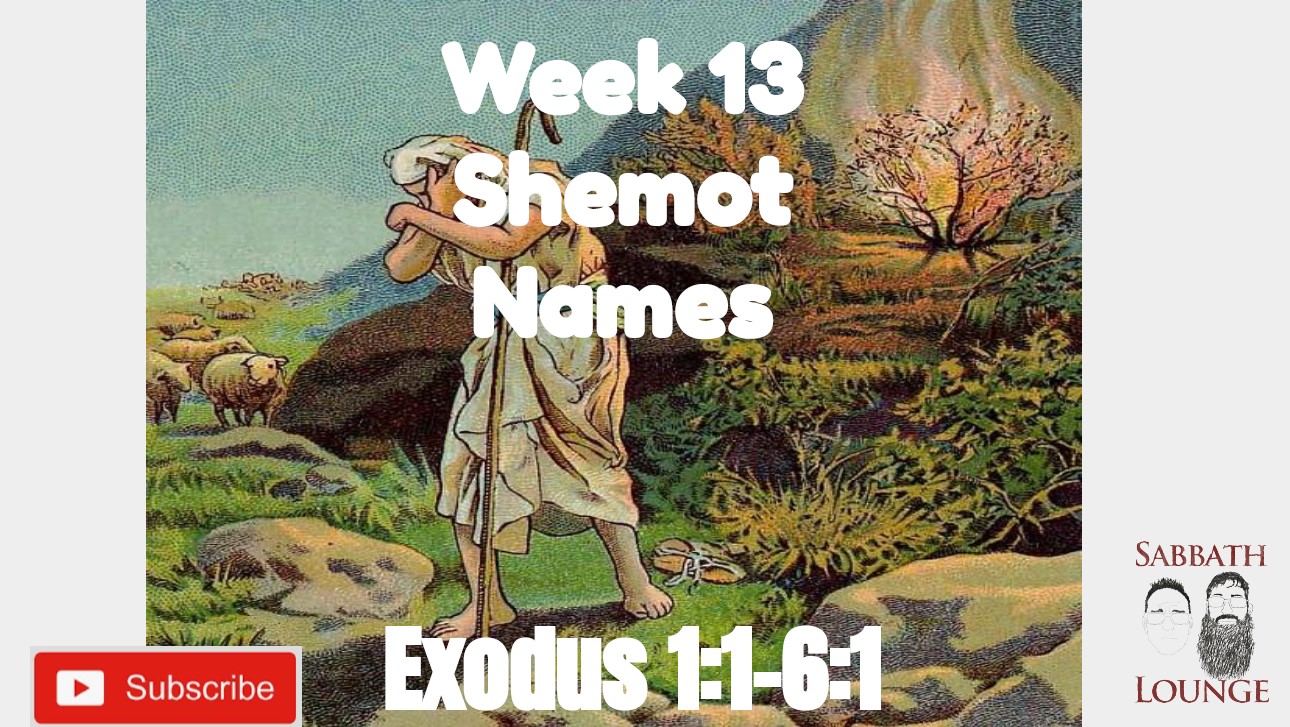

Week 13 – Shemot: A Journey Through Exodus
In this edition, we’re discussing Shemot, or “Names,” which is the 13th week of our Torah study. This week’s focus is on Exodus 1:1–6:1, covering the early chapters of Moses’ life, his calling, and the beginning of the Exodus story.
The Story of Moses Begins
For many, the story of Moses is a well-known one, filled with adventure and profound lessons. When Matt and Jake first began exploring the Torah seriously, they found that Exodus was a great place to start. Genesis can be complex, filled with explanations that can be difficult for kids to grasp. But Exodus? It’s a story you can follow like an adventure, with plenty of drama and suspense. It’s a book that works well for teaching children, as it’s engaging and easy to act out. And just like a good TV series, it’s full of cliffhangers that make you want to keep reading to find out what happens next.
The Promised Land and the Journey of Moses
At the start of Shemot, we look at the land promised to Abraham. Matt highlights how the land granted to Abram (Abraham) was much larger than many people realize. Today, we often think of the land of Israel as a small section near the Red Sea, but the original promise encompasses a much broader area, stretching to what will eventually be the land inhabited by a great multitude of people in the future Exodus. If you haven’t studied the idea of a “greater Exodus,” Matt encourages you to dive deeper into that topic, as it sheds more light on the meaning of the Exodus story.
Moses, the central figure of Exodus, begins his journey in Egypt. Early in the story, Moses flees to Midian. While it might seem like a long journey, Midian is actually not far from Egypt. It’s located near the region of Mount Sinai, which is traditionally identified with modern-day Saudi Arabia. This geographical understanding helps in unraveling the larger context of the Exodus.
Who Were the Midianites?
The Midianites play a key role in Moses’ life, particularly with his father-in-law, Jethro. The Midianites are descendants of Abraham through his second wife, Keturah. Jethro, also known as Reuel, was a priest, and while he wasn’t from the Levitical priesthood, his role is significant in Moses’ story. Some might assume Jethro was a pagan priest, but Matt and Jake suggest that he could have been a righteous man, possibly even following the order of Melchizedek, as he offers wisdom and guidance to Moses without conflict. The notion that the Midianites were pagan stems from their history of idol worship, but the presence of such practices doesn’t necessarily mean that Jethro was part of that tradition.
Jake explains that the Midianites’ proximity to Egypt made them an advantageous location for trade and support. During a famine, while Egypt was struggling, the Midianites managed to maintain their resources and could easily travel to Egypt for supplies. This situation highlights an important theme in the Torah: the idea of a “remnant,” a small group of people who remain faithful, even when the larger world around them succumbs to corruption.
A Deeper Look at Moses’ Lineage
The study of Moses’ lineage is vital to understanding his role. Moses is the grandson of Levi, placing him in the priestly line. But the timeline of his family is not always clear, and there are some gaps. Matt and Jake explore these timelines, revealing that Moses’ family connection to the priesthood lineage was significant, but other details remain mysterious. The genealogy also ties into the prophecy of Israel’s time in Egypt, which was foretold to last 430 years. A period that seems long to us but made sense in the context of their time.
Moses: From Egypt to the Wilderness
Moses’ life is divided into three 40-year segments: 40 years in Egypt, 40 years in the wilderness, and 40 years leading Israel. Jake speculates that Moses’ time in the wilderness may have been a humbling experience that shaped his leadership style. Though he grew up in Pharaoh’s household, he had to learn humility and patience. This transformation took place over 40 years, preparing Moses for his ultimate calling.
Interestingly, the story of Moses pulling a miraculous staff from the ground to prove his divine calling mirrors many legendary tales, such as the sword in the stone. While not a biblical event, this story, found in the Jasher text, is plausible and aligns with the themes of divine intervention and destiny.
The Burning Bush: A Powerful Symbol
One of the most iconic moments in Moses’ story is the burning bush. This encounter with God marks a turning point in Moses’ life. The bush was on fire but not consumed, symbolizing God’s presence. In the Hebrew text, the bush is described as a thorny bush—often a symbol of sin. Yet, despite its thorns, it was not consumed by the fire. This parallels the idea that even though we, as sinful people, are consumed by the fire of God’s presence, we are not destroyed. The fire refines us without burning us up. This powerful image speaks to the idea of atonement and purification, as seen in the Ark made of acacia wood, which represents sinful flesh covered in gold—signifying redemption and the grace of God.
Moses and the Ark: Another Parallel
The comparison between Moses’ journey and the Ark of Noah is fascinating. Just as Noah’s Ark was a vessel of salvation for humanity, Moses’ journey, beginning with him floating down the Nile in a basket, represents another form of salvation. Just as the Ark in Noah’s day saved people from the flood, Moses’ basket, covered in pitch, like the Arrk was a means of saving Israel from the oppression of Egypt.
A Modern Parallel: The Exodus and America
Matt and Jake also draw an interesting parallel between the Exodus and the present-day situation. Many believe that modern America mirrors ancient Egypt in many ways. With Egypt symbolizing a place of oppression and idolatry, they suggest that there may be a future “Exodus” for believers in today’s world. This connection to Revelation and the coming plagues further enriches the story of the Exodus and its relevance for today.
Conclusion
This week’s Torah portion, Shemot, invites us to explore the life of Moses, the history of Israel, and the deep spiritual lessons that emerge from these ancient stories. As Matt and Jake remind us, the Exodus story is not just about the past. It has much to teach us about patience, leadership, and redemption today. They encourage you to read, study, and reflect on these stories in your own life.
If you’d like to continue learning, don’t forget to like, share, and subscribe to stay updated with more insights from the Torah. Until next time, stay tuned and keep studying!


Leave a comment